Guest Feedback Scorecard for Hotels (Metrics That Matter)
You don’t need a proprietary “impact score” to run a better hotel. This scorecard shows the guest feedback metrics that predict reputation, conversion, and operational priorities.
Some platforms promote “impact scores” that summarize guest feedback. You don’t need a proprietary score to get the benefits—you need a scorecard you can run every month.
This guide gives you a simple, hotel-first scorecard based on the metrics that actually change reputation and bookings.
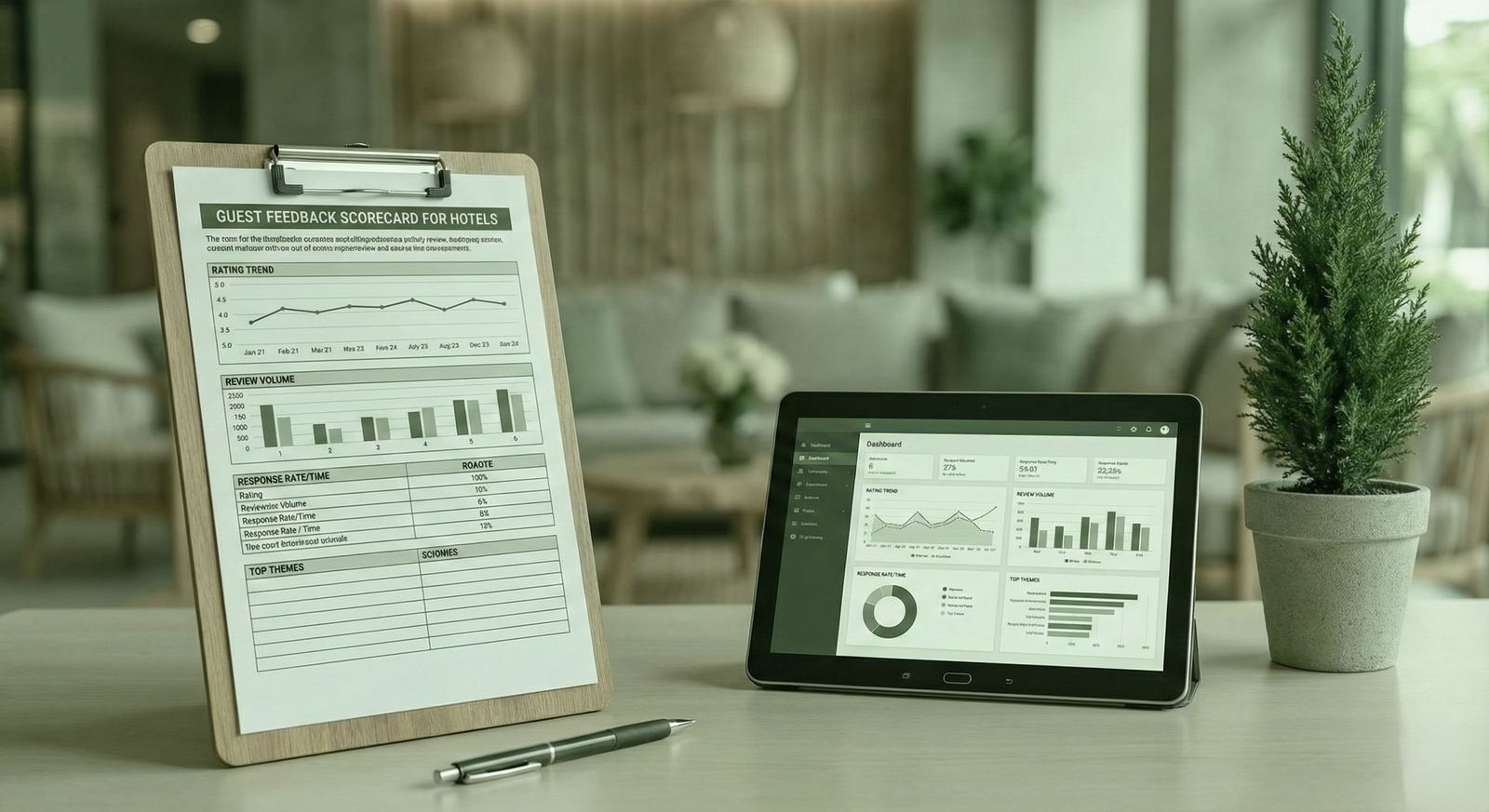
The scorecard (what to track)
1) Rating level and rating trend
Track:
- average rating (current)
- 30/90-day trend (up, flat, down)
Trend matters more than a single snapshot because it tells you whether changes are working.
2) Review volume and velocity
Track:
- number of new reviews per month
- where they show up (Google vs OTAs)
Low volume makes ratings volatile. Steady volume improves credibility.
3) Response rate (by platform)
Track:
- % of reviews you responded to on Google
- % on key OTAs
Guests notice gaps. Competitors often respond on Google but ignore OTAs (or vice versa).
4) Response time (especially for negatives)
Track:
- average response time overall
- average response time for 1–2 stars
If you need one SLA: respond to 1–2 star reviews within 24 hours.
5) Personalization (a quick audit)
This is hard to measure automatically, but easy to audit:
- pick 20 recent replies
- count how many include one real “proof” detail
If most replies could be pasted onto any hotel, you’re losing trust.
Use: - The Importance of Responding to Reviews Individually
6) Top themes driving negatives
Track:
- the top 3 negative themes (noise, Wi‑Fi, cleanliness, check‑in, parking)
- how often each appears
Then assign an owner and a deadline for the fix.
7) Multi-location consistency (if you manage a group)
Track:
- response rate/time per property
- which properties are slipping
In groups, “best practice” only works if it’s consistent.
How Review Agent supports the scorecard
Review Agent is designed for the workflow behind these metrics:
- centralize reviews across platforms
- draft replies fast (without losing tone)
- keep brand voice consistent across properties
- use themes/trends to turn feedback into action
If you’re building the system that feeds this scorecard, start here: - A First-Party Guest Feedback Engine to Reduce OTA Dependency
A monthly ritual (so it actually happens)
Make it a 30-minute meeting:
- review the scorecard
- pick one operational fix to prioritize
- pick one response-quality improvement to enforce
This is where reputation management becomes operations.
Next step
If you want the most practical “what to do next” checklist, use: - 21 Hotel Reputation Management Strategies That Drive Bookings
Share this Article
Link copied!