Mastering Google Reviews: Πλήρης οδηγός για ξενοδοχεία
Οδηγός για ξενοδοχεία: πώς να πάρετε περισσότερες κριτικές Google (ηθικά), να απαντάτε γρήγορα και προσωπικά, να χειρίζεστε no‑comment/αρνητικές κριτικές και να κάνετε το feedback βελτιώσεις.
Για τα περισσότερα ξενοδοχεία, η Google είναι η πρώτη πλατφόρμα κριτικών που βλέπει ο επισκέπτης. Η βαθμολογία, ο όγκος κριτικών και κυρίως οι απαντήσεις επηρεάζουν αν κάποιος θα κάνει click, θα καλέσει ή θα κλείσει.
Αυτός ο οδηγός καλύπτει το πλήρες σύστημα: ηθική συλλογή κριτικών, γρήγορες αλλά ανθρώπινες απαντήσεις και χρήση των κριτικών ως δεδομένα για βελτίωση λειτουργιών.
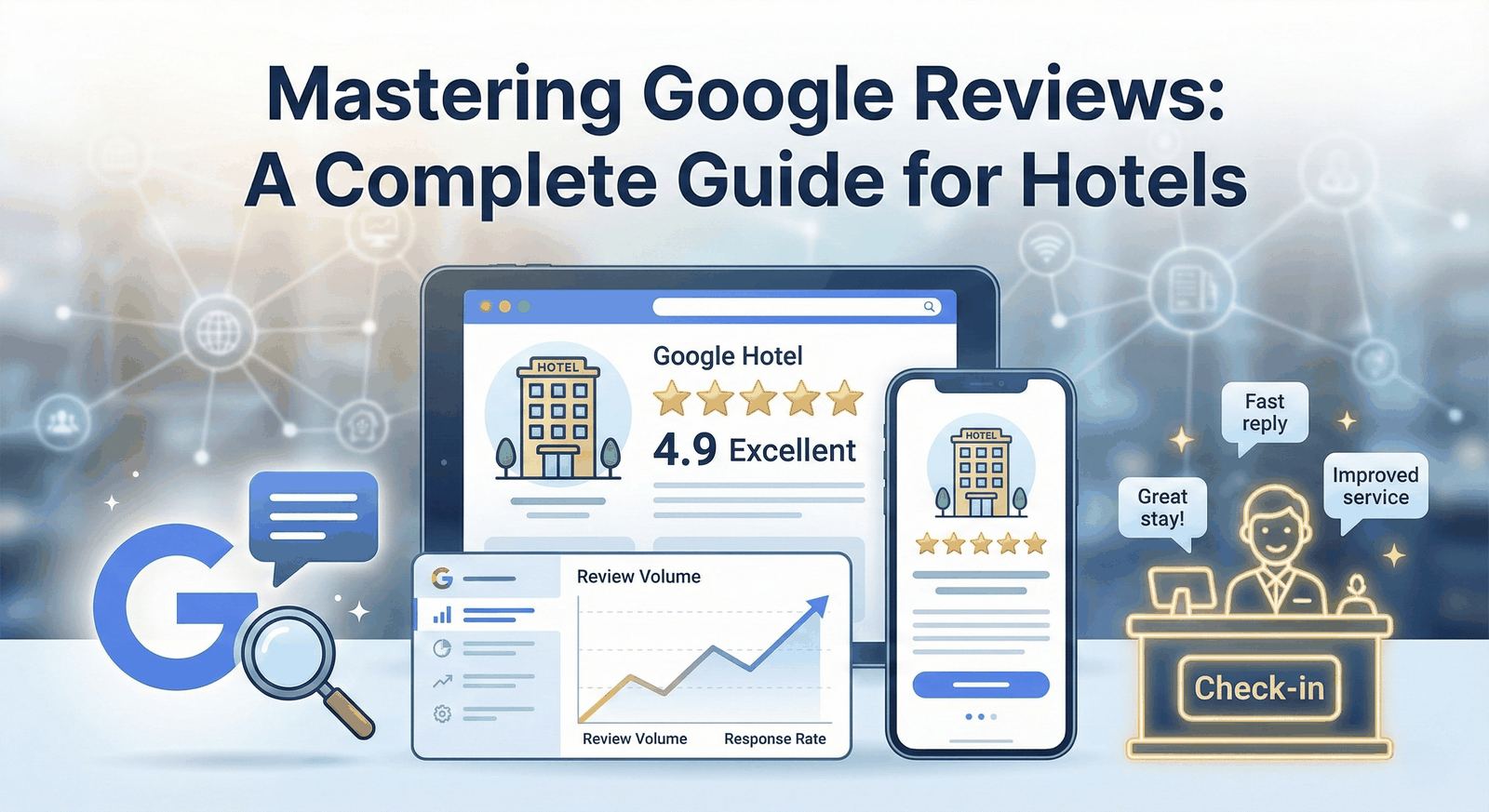
1) Τι σημαίνουν οι κριτικές Google για τα ξενοδοχεία
Δεν ελέγχετε τι θα γράψει ο επισκέπτης. Ελέγχετε όμως:
- πόσο σταθερά ζητάτε κριτικές
- πόσο γρήγορα και προσωπικά απαντάτε
- πόσο γρήγορα διορθώνετε επαναλαμβανόμενα ζητήματα
2) Πώς να πάρετε περισσότερες κριτικές Google (χωρίς να παραβιάσετε κανόνες)
Η καλύτερη διαδικασία είναι απλή και επαναλήψιμη:
Ζητήστε στη σωστή στιγμή
Καλές στιγμές:
- μετά από ομαλό check‑in
- μετά από επίλυση παραπόνου
- στο check‑out όταν ο επισκέπτης είναι ευχαριστημένος
Κάντε το εύκολο
- QR στη reception (και σε post‑stay email)
- σύντομο μήνυμα με μία CTA
Μην δίνετε incentives
Αποφύγετε δώρα/εκπτώσεις για κριτικές. Είναι ρίσκο και μειώνει εμπιστοσύνη.
3) Απαντήσεις που κλιμακώνονται (χωρίς copy/paste)
Οι ομάδες χρειάζονται ταχύτητα, αλλά όχι “template spam”.
Χρησιμοποιήστε:
ΕΥΧΑΡΙΣΤΩ → ΣΥΓΚΕΚΡΙΜΕΝΟ → ΔΕΣΜΕΥΣΗ → ΠΡΟΣΚΛΗΣΗ
Για γρήγορο workflow: Πώς να απαντάτε σε κάθε κριτική Google σε δευτερόλεπτα
Για να μην ακούγονται ίδιες οι απαντήσεις: Γιατί έχει σημασία να απαντάτε σε κριτικές ξεχωριστά
4) Πώς να απαντάτε σε κριτική Google χωρίς σχόλιο
Οι no‑comment κριτικές είναι συχνές. Κρατήστε το σύντομο:
- ευχαριστήστε
- προσκαλέστε τον επισκέπτη ξανά
- προσθέστε ένα ασφαλές στοιχείο (πόλη/σεζόν/γενική εμπειρία)
Παράδειγμα (5 αστέρια, χωρίς κείμενο):
“Ευχαριστούμε πολύ για τη διαμονή σας και τη βαθμολογία 5 αστέρων. Χαιρόμαστε που μας επιλέξατε στην [Πόλη] και θα χαρούμε να σας φιλοξενήσουμε ξανά.”
Αποφύγετε ισχυρισμούς (“λατρέψατε το πρωινό”) αν δεν αναφέρθηκαν.
5) Αρνητικές κριτικές: η ασφαλής προσέγγιση για ξενοδοχεία
Η απάντησή σας είναι για τους μελλοντικούς αναγνώστες.
- ήρεμος τόνος
- αναγνώριση εμπειρίας
- μία συγκεκριμένη βελτίωση όπου ταιριάζει
- επίλυση offline για λεπτομέρειες
Playbook: Πώς να απαντάτε σε αρνητικές κριτικές ξενοδοχείου
Πρότυπα: 15+ Essential Hotel Review Response Templates
6) Fake ή άδικη κριτική; πρακτικά βήματα
Δεν είναι όλες οι κακές κριτικές fake, αλλά κάποιες είναι.
Βήματα:
- κρατήστε εσωτερικά στοιχεία (κράτηση, logs)
- απαντήστε επαγγελματικά χωρίς προσωπικά δεδομένα
- χρησιμοποιήστε τα εργαλεία report της Google όπου χρειάζεται
Ακόμη κι αν δεν αφαιρεθεί, μια ήρεμη, συγκεκριμένη απάντηση προστατεύει την εικόνα σας.
7) Κριτικές ως δεδομένα λειτουργιών
Το μεγαλύτερο ROI είναι να διορθώνετε ό,τι επαναλαμβάνεται:
- top 3 θετικά themes να τα ενισχύετε
- top 3 αρνητικά themes να τα διορθώνετε
- owners + deadlines
Το Review Agent βοηθά με themes/sentiment σε μία εικόνα για Google + OTAs.
8) Multi‑location: συνέπεια στις απαντήσεις
Τα προβλήματα σε portfolios είναι συνήθως θέμα συστήματος:
- άνισο response rate
- διαφορετικό ύφος ανά property
- αργές εγκρίσεις
Best practice:
- κεντρικό inbox
- οδηγίες brand voice
- εγκρίσεις για 1–2 αστέρια και edge cases
Συμπέρασμα
Το “mastering” των κριτικών Google δεν είναι τελειότητα—είναι συνέπεια: ηθική συλλογή, γρήγορες απαντήσεις με πραγματικές λεπτομέρειες και βελτιώσεις από το feedback.
Επόμενο: Βελτιστοποίηση Google My Business για ξενοδοχεία (2025)
Share this Article
Link copied!